The U.S. federal government debt, now at 39.2 trillion dollars [as of 6/12/26], is increasing at a rapid and unsustainable pace as annual U.S. budget deficits now exceed 1.5 trillion dollars per year, as this chart documents:
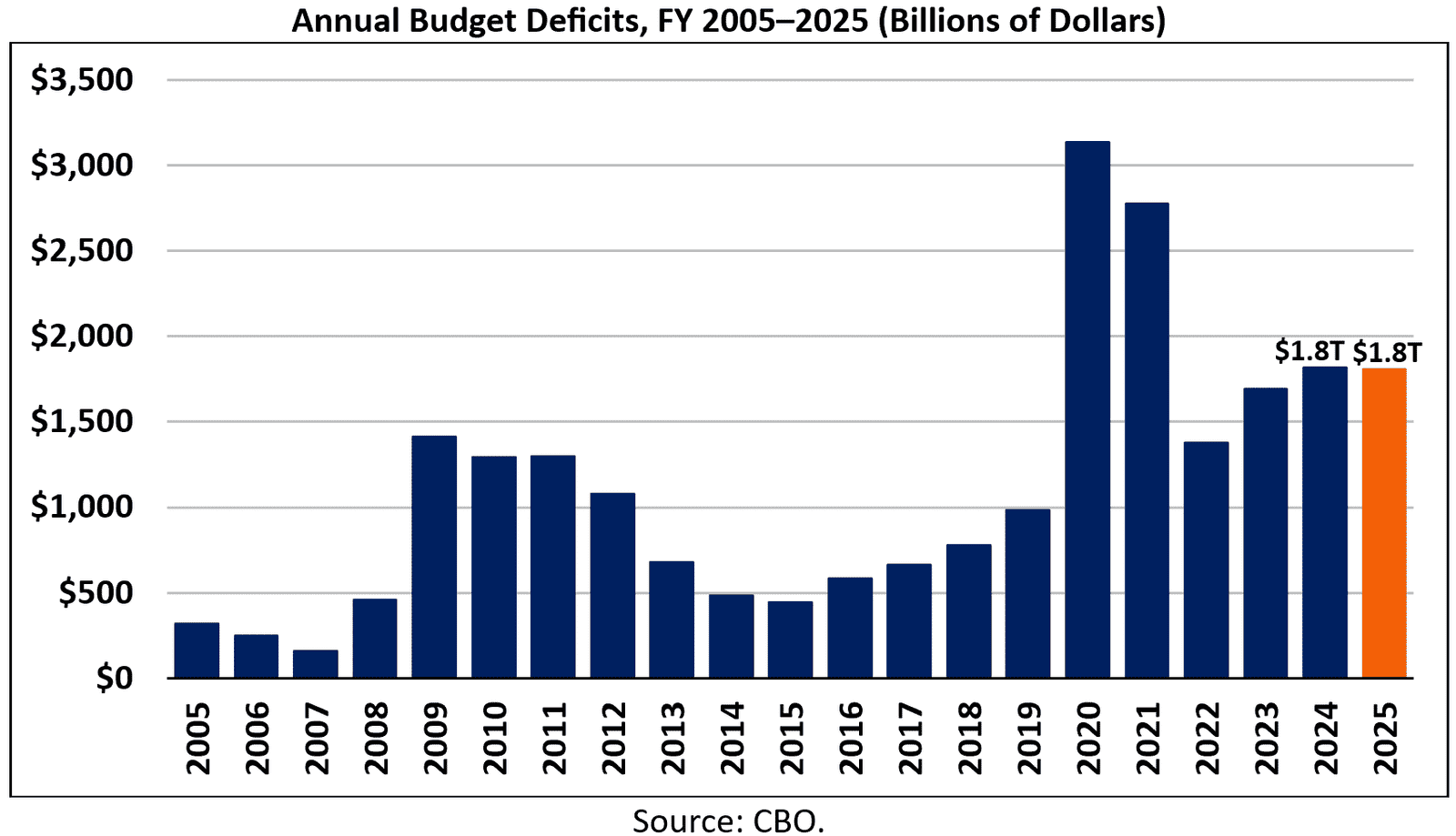
Caution: the U.S. federal government's Social Security Trust Fund will be depleted by sometime between 2032-2035, and The Social Security Administration or SSA has announced plans to cut back social security payments, possibly between 17%-22% or more, after the Social Security Trust Fund is depleted.
The U.S. debt clock attempts to monitor the problem of increasing U.S. federal government debt.
The U.S. debt thermometer, provided by the Committee for a Responsible Budget.
U.S. fiscal responsibility organizations include:
Committee for a Responsible Budget, including their debt thermometer.
Center on Budget and Policy Priorities, including the economic impact of the U.S. budget.
The Peter G. Peterson Foundation.
Tax Project Institute, including the article Ways Out of Debt: US Options for National Debt.
U.S. fiscal irresponsibility factions include:
U.S. President Donald Trump. Trump added $7.8 trillion to the national debt from 2016-2020, added to the U.S. federal debt by cutting taxes in his 2025 legislation, and is requesting a $500 billion increase in the 2027 U.S. federal government military budget.
Americans for Tax Reform, founded and led by Grover Norquist, with it's amazingly fiscally irresponsible no new taxes Taxpayer Protection Pledge that was signed by many elected republican party politicians by 2012. [A few politicians have notably quit the no new taxes taxpayer protection pledge.]
Tea Party movement, with it's 2007 fiscally irresponsible anti-tax focus [and missing website].
The U.S. Federal Budget is also analyzed by Wikipedia.
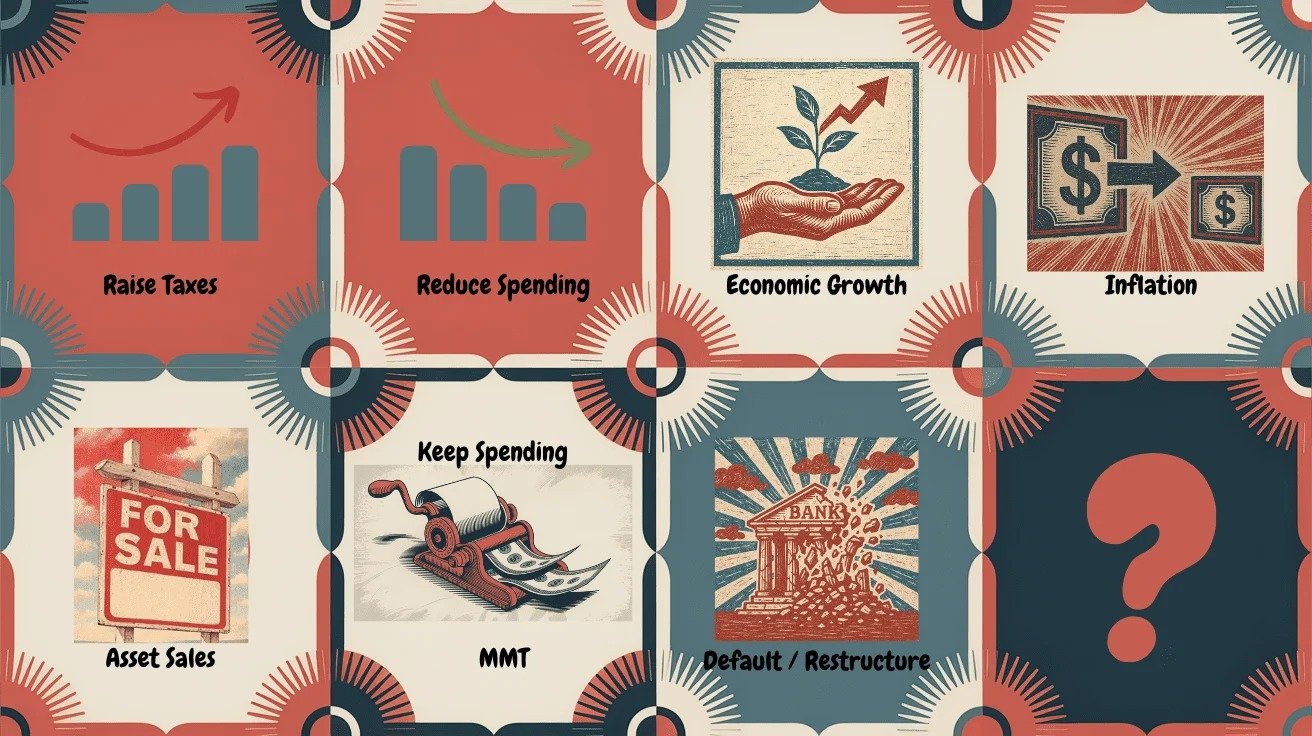
Options for fixing the United States federal government deficit spending problem are helpfully provided by the Tax Project Institute. Unfortunately, responsible solutions involve some essential economic austerity and/or trade-offs either now and/or later.
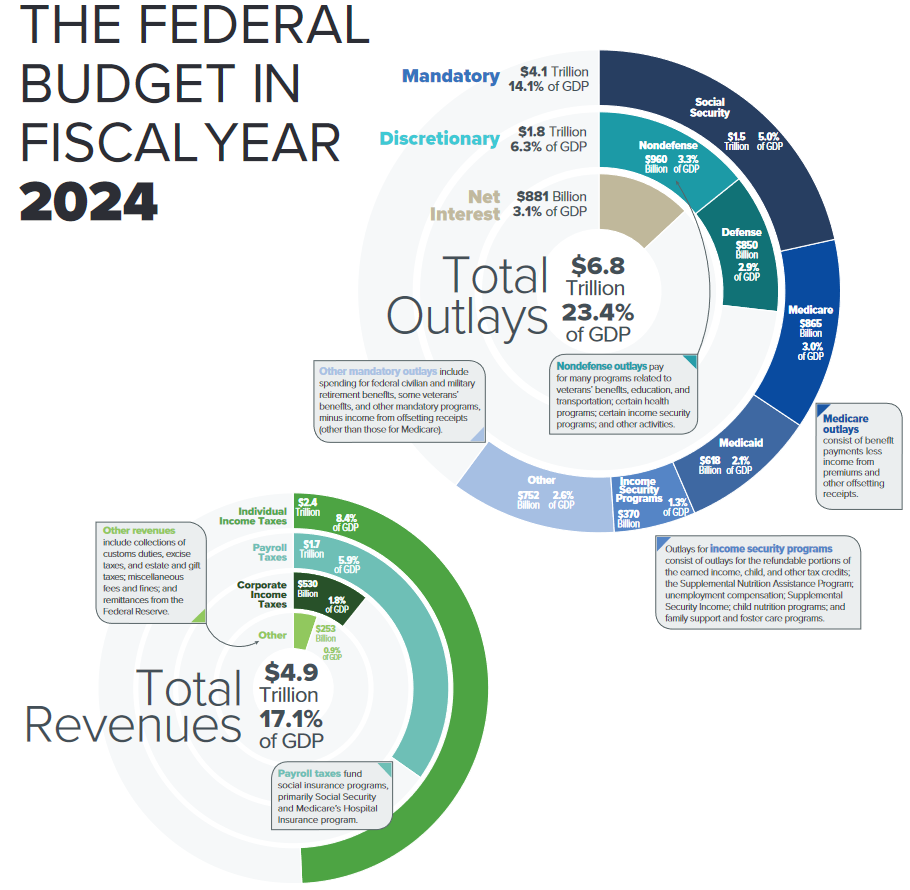
Here is a chart about how the U.S. federal government's 2024 budget produced a huge 1.9 trillion dollar deficit, which is 6.3% of the 2024 U.S. GDP.
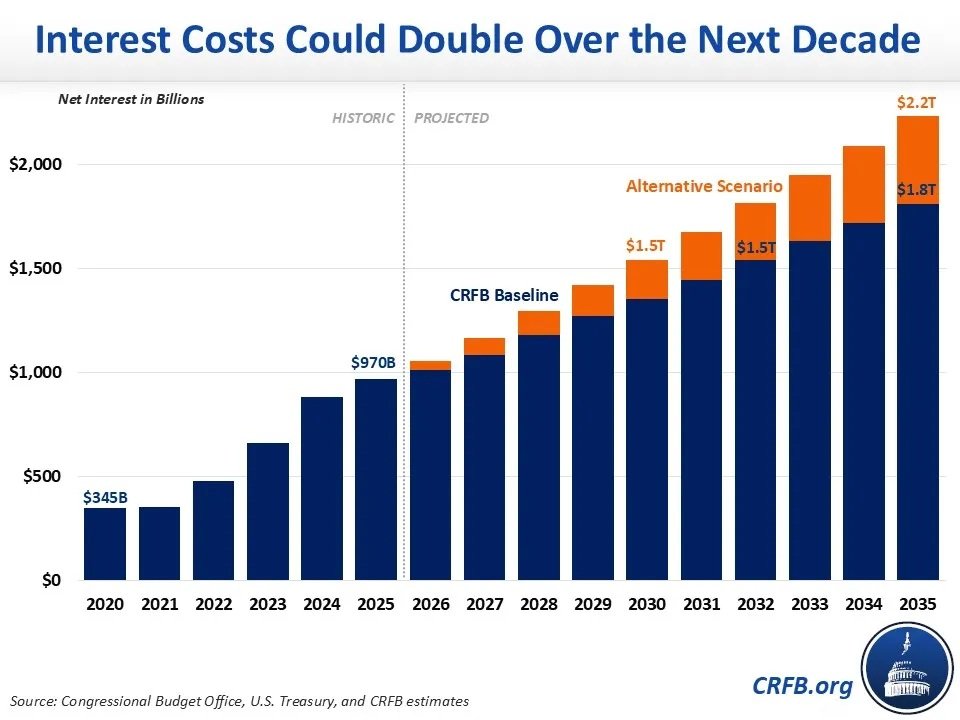
The cost of servicing the U.S. federal government debt, or annual interest payments on the US federal debt, is projected to increase.
Here are 2 charts placing the growing United States federal government debt in a global context.
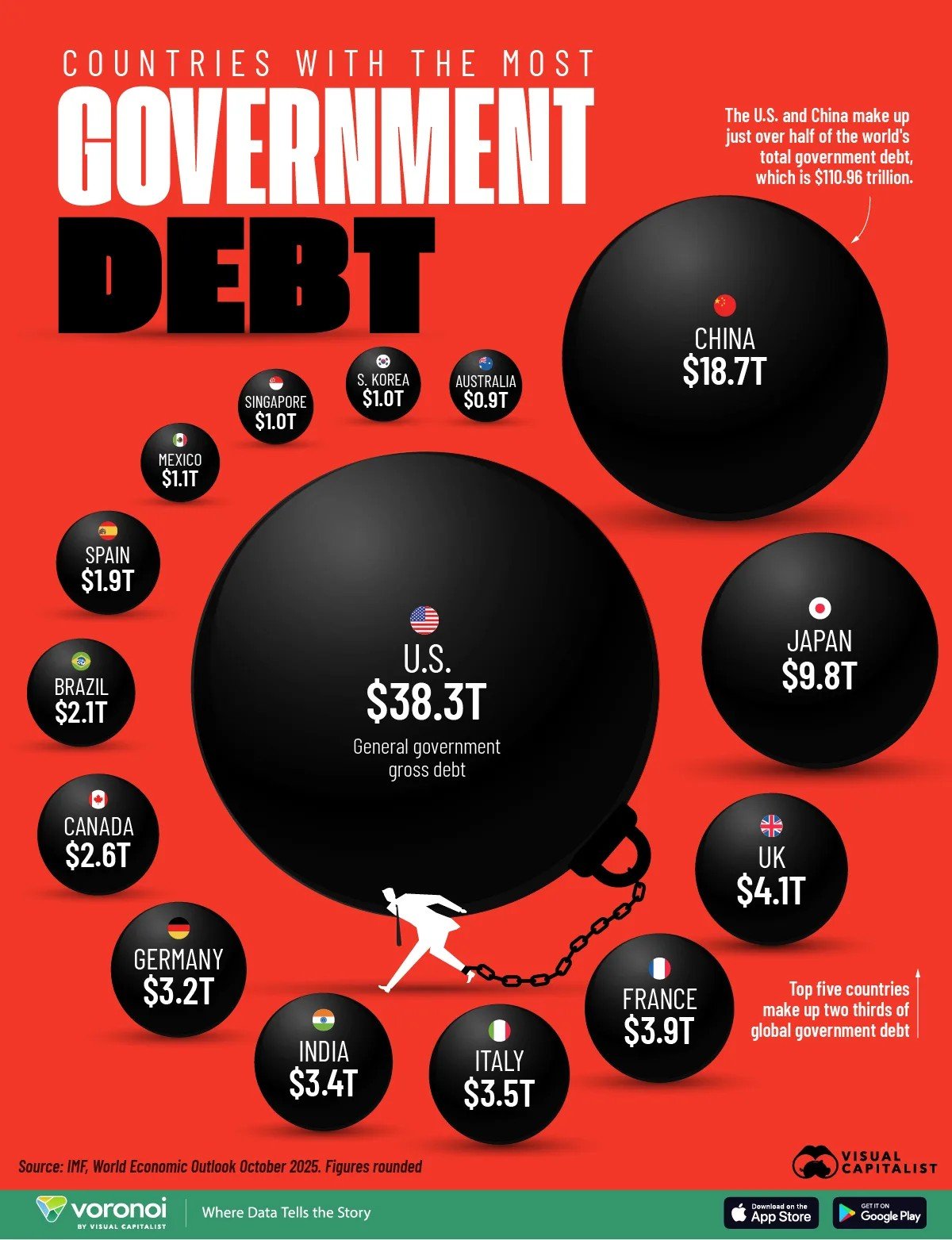
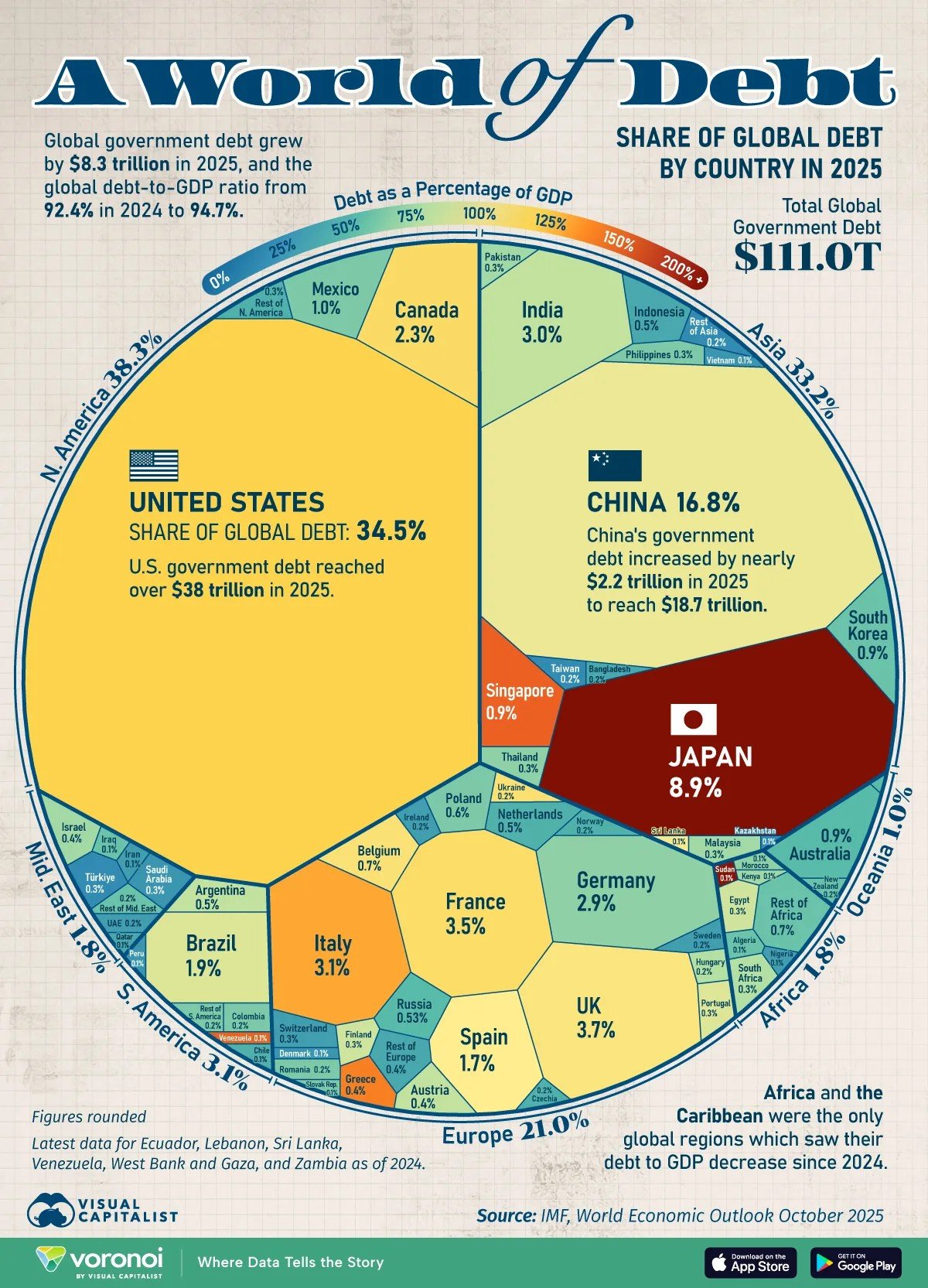
While I have posted long term warnings since 2005 at EmpowermentResources.com about U.S. federal government deficit spending and unsustainable heavily borrow and spend debt-fueled prosperity, the current U.S. President, Donald Trump, is once again unsustainably borrowing money from the future to produce amazing borrow and spend debt-fueled prosperity during his second 2025-2028 presidency. While Trump will probably be able to borrow money to produce some amazing short-term 2025-2028 prosperity, Trump's 2017-2020 presidency increased U.S. government federal debt by $7.8 trillion and Trump's projected 2025-2028 spending and increased federal debt will cost Americans higher U.S. federal government debt servicing costs in the future. Also, the U.S. government probably can't continue its present trend of borrowing more than 1.5 trillion dollars a year and this future budget crunch could be very difficult for the U.S. economy in the future, a problem that Trump, the republicans, and the democrats appear to want to postpone.
U.S. President Donald Trump added $7.8 trillion to the national debt from 2016-2020, added to the U.S. federal debt by cutting taxes in his 2025 legislation, and is requesting a $500 billion increase in the 2027 U.S. federal government military budget.
U.S. President Donald Trump's 2027 budget request for spending $1.5 trillion on the US military seems like an economically unsustainable attempt to increase U.S. military spending, U.S. federal government deficit spending, and the U.S. federal debt. Trump's $1.5 trillion in military spending in the 2027 budget request might be Trump padding his requested 2027 military budget by requesting far more spending than the U.S. military expects or needs, far more than the U.S. federal government can afford, and far more than Trump expects to be actually spent.
I have provided some video and music at TimeForFun.us/politicalmusicandvideos.html to help explain the US federal deficit spending problem in an entertaining way.
While Trump is apparently focused on a second borrow and spend presidency to produce debt-fueled prosperity where the U.S. government borrows more money and goes deeper into debt to pay it's bills, the U.S. Government's debt has grown to 39.2 trillion dollars [as of 6/12/26] and the U.S. now has a 125.78% debt-to-GDP ratio [as of 6/12/26].
Debt-to-GDP ratio is a key measure of a government's debt level and its level of fiscal responsibility. The IMF or International Monetary Fund estimates [as of 6/12/26] that the U.S. has a relatively high 125.78% debt-to-GDP ratio. The COVID-19 epidemic was one surprising factor that increased the U.S. federal debt.
You can click here to see an IMF chart that shows the changes in the U.S. federal government's debt-to-GDP ratio from 1990-now.
The U.S. federal government credit rating has been slightly downgraded as recently as 2025.
Analysis of the $39.2 trillion [as of 6/12/26] U.S. federal government deficit includes:
From Riches to Rags: Causes of Fiscal Deterioration Since 2001, by the Committee for a Responsible Budget.
See how the national debt grew to more than $36 trillion, a 6/11/25 Washington Post article.
How the national debt affects the U.S. — and you — in 10 charts, a 6/23/25 Washington Post article.
Top 13 Fiscal Charts of 2025, by the Committee for a Responsible Budget.
Copyright © 2026 by Ed Harding